
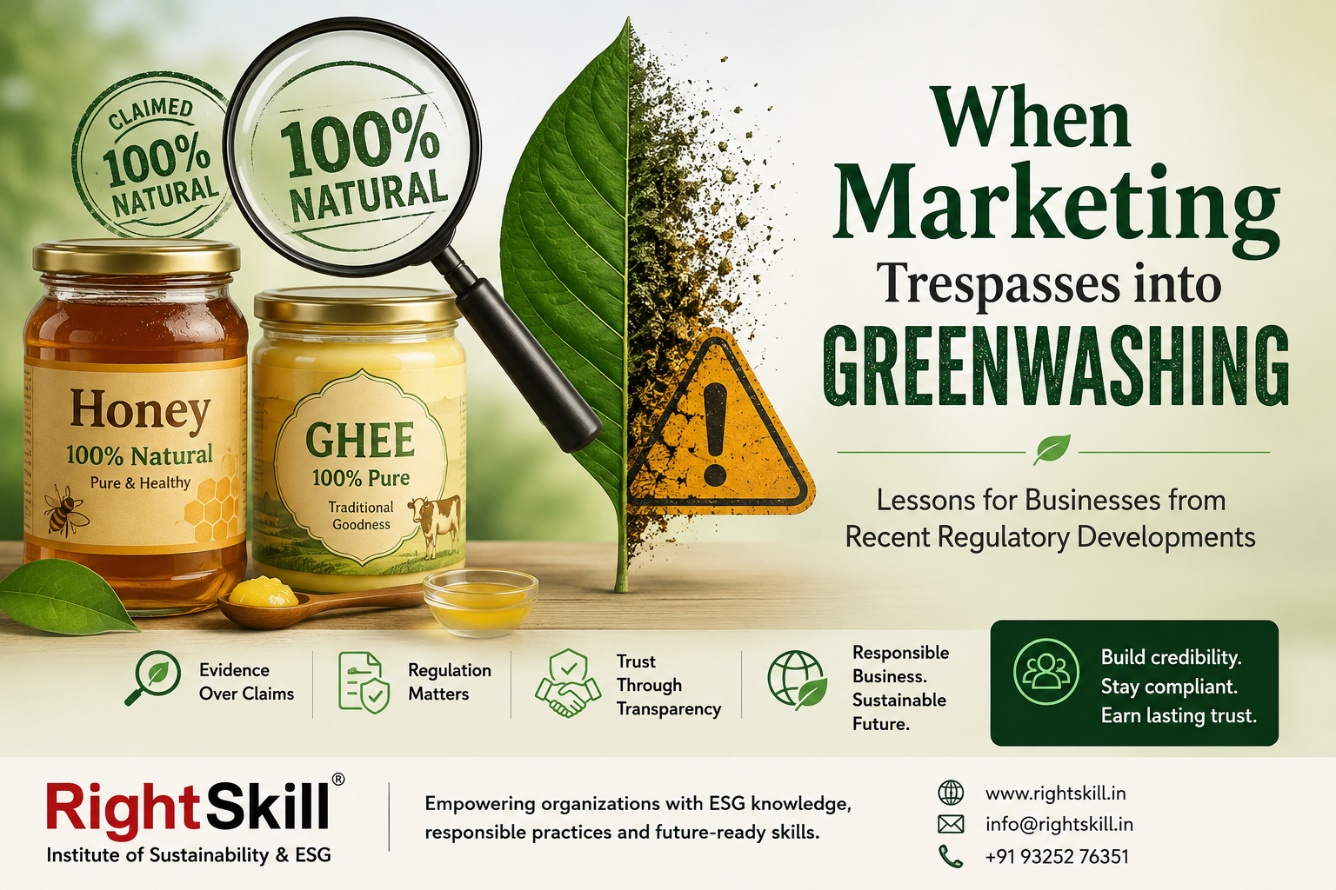
A Lesson Every Business Should Learn
Recent reports indicate that FSSAI has directed Dabur India to remove “100% Natural” and “100% Pure” claims from certain products, along with concerns over the use of the “Jaivik Bharat” logo.
While the regulatory process will determine the outcome, the incident offers an important lesson for every business:
What is Greenwashing?
Greenwashing occurs when a company makes environmental or sustainability claims that are exaggerated, vague, or not adequately supported by evidence, creating a perception that a product or business is “greener” than it actually is.
Why Should Businesses Care?
Today’s consumers, investors, and regulators expect facts—not marketing slogans.
Unsupported sustainability claims can lead to:
- Regulatory action
- Loss of customer trust
- Brand reputation damage
- Legal and compliance risks
ESG Starts with Governance
Greenwashing is not just an environmental issue—it’s a Governance issue.
Strong ESG governance ensures that:
- Sustainability claims are evidence-based.
- Labels and certifications are used correctly.
- Marketing aligns with regulatory requirements.
- Legal, compliance, and sustainability teams review public communications.
A Quick Greenwashing Check
Before making any sustainability claim, ask:
- Can we prove it with credible evidence?
- Is the wording accurate and not misleading?
- Are we authorised to use the certification or logo?
- Would we be comfortable if this claim were independently audited?
If the answer is “No” to any of these, rethink the communication.
The Right ESG Approach
The most trusted organisations don’t compete on the boldest sustainability claims—they compete on the most credible ones.